Garchomp holds at 37% as Gardevoir, Corviknight, and Skarmory surge to punish the top three while stall claims the ladder summit
poch.ms editorial · Analyzed 154 verified Master Ball+ teams from the last 7 days. Usage is the share of teams running each Pokémon.
The week at a glance
Garchomp continues to set the pace in singles at 37%, running Rough Skin universally with builds split between offensive Scale Shot sets (48%) and supportive Stealth Rock configurations (44%). Mimikyu holds steady at 22%, unchanged from last week, still banking on Disguise into Swords Dance and Shadow Sneak priority to close out games. Meowscarada rounds out the top three at 21%, though its within-week trajectory — 24% early, sliding to 17% by the end — suggests the meta is catching up to it.
The defining shift this week is the rise of direct answers to that top trio. Gardevoir, Skarmory, Corviknight, Gengar, and Volcarona all climbed significantly in the second half of the week, each threatening a top-three pick with super-effective STAB. Balanced teambuilding leads at 56%, with offensive at 23% and defensive at 20%, though the high ladder is tilting hard toward stall.
The type landscape is remarkably flat — Flying and Steel share the lead at 69%, Water and Fire sit at 68%, and Ghost, Dark, Ground, and Dragon cluster between 64% and 66%, leaving no single type dominant. Doubles runs on an entirely different engine: Basculegion and Kingambit tie for second at 26% behind Garchomp's 29%, the format revolves around support staples like Whimsicott, Farigiraf, and Incineroar, and its 83% balanced playstyle rate dwarfs singles' 56%.
Usage TOP 20
Share of teams running each Pokémon
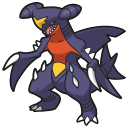 Garchomp
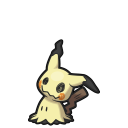 Mimikyu
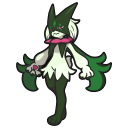 Meowscarada
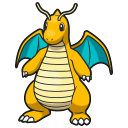 Dragonite
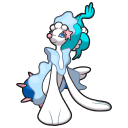 Primarina
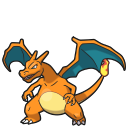 Charizard
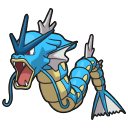 Gyarados
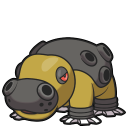 Hippowdon
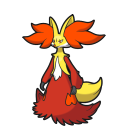 Delphox
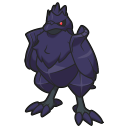 Corviknight
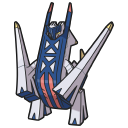 Archaludon
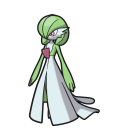 Gardevoir
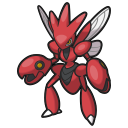 Scizor
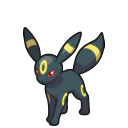 Umbreon
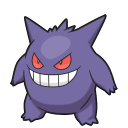 Gengar
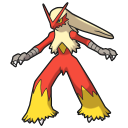 Blaziken
 Hydreigon
 Metagross
 Ceruledge
 Aegislash
Doubles meta TOP
From 35 doubles teams · a different pick pool
Garchomp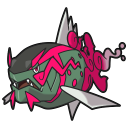 Basculegion
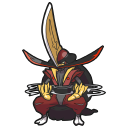 Kingambit
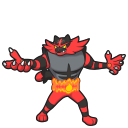 IncineroarCharizard
 Whimsicott
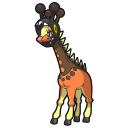 Farigiraf
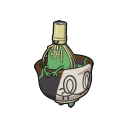 Sinistcha
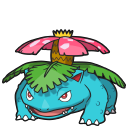 Venusaur
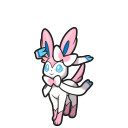 Sylveon
 Raichu
 Blastoise
Core pick builds
How the top picks are actually set up — counted only from builds with a confirmed ability/moves (percentages are of that sample)
Meta by rating band
Even in one season, pick preferences shift by rating
Garchomp48%Corviknight30%Hippowdon30%Gardevoir22%Charizard22%Primarina17%Gengar17%Aegislash17%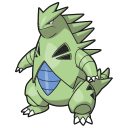 Tyranitar17%
 Torterra17%Garchomp41%Meowscarada25%Mimikyu22%Dragonite20%Delphox16%Gyarados14%Charizard14%Archaludon12%Scizor12%
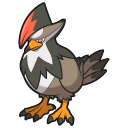 Staraptor12%
The 2000+ band paints a strikingly different picture from mid-ladder. Garchomp sits even higher at 48%, but the real story is the supporting cast: Corviknight and Hippowdon both land at 30% in the top band versus just 3% and 11% in the 1000-1999 range, and Torterra appears at 17% above 2000 while registering 0% below. These are slow, bulky picks — Hippowdon at base 47 Speed, Corviknight at base 67 — built to win through hazard pressure and residual damage rather than raw offense. The mid-ladder, by contrast, leans on speed: Meowscarada hits 25% (vs 13% high), Mimikyu 22% (vs 9%), and Delphox 16% (vs 0%), all picks that want to outpace opponents and force quick knockouts.
Corviknight's 30%-to-3% skew is the week's most dramatic skill divide and the clearest sign that stall rewards precise, patient play in ways mid-ladder teams struggle to replicate. Torterra's complete absence below 2000 tells the same story — it needs a tailored gameplan to function, and right now that gameplan exists almost exclusively at the top. On the other end, Delphox's 16%-to-0% reverse skew suggests it thrives as a fast breaker in less optimized fields but loses its niche against tighter defensive cores.
Risers & fallers
Late-week usage vs early week (from 8/16)
Gardevoir8→14%+7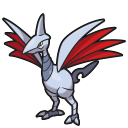 Skarmory3→10%+6Gengar7→13%+6
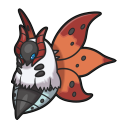 Volcarona5→11%+6Corviknight9→14%+5Blaziken12→5%-7Meowscarada24→17%-7Umbreon12→6%-6Charizard15→11%-4Ceruledge10→6%-4
Every major riser this week has the same job description: punish the top three. Gardevoir jumped from 8% to 14%, threatening Garchomp with Moonblast. Skarmory climbed from 3% to 10% and Corviknight from 9% to 14%, both exploiting Steel's advantage into Mimikyu's Fairy typing — Skarmory pressures it directly with Flash Cannon, while Corviknight walls it behind Iron Defense and shrugs off Play Rough. Gengar rose from 7% to 13% as another Mimikyu check via Shadow Ball, and Volcarona went from 5% to 11%, using Quiver Dance to set up on Meowscarada and punish it with super-effective Bug STAB. Garchomp's ×4 Ice weakness remains the format's biggest exploitable pressure point, and the rising Fairy and special-attacking threats only make it harder to build around.
On the flip side, Blaziken dropped hardest within the week, falling from 12% to 5%. Meowscarada opened strong at 24% but slid to 17% as the counter-picks caught up. Umbreon halved from 12% to 6%, squeezed out by the Ghost and Fairy types gaining ground. Charizard eased from 15% to 11%, and Ceruledge dipped from 10% to 6%. Week over week, several former mainstays also shed share — Gyarados fell from 19% to 13%, Primarina from 18% to 14%, and Archaludon from 15% to 11% — clearing room for the new counter-pick wave.
Type landscape
Share of teams with at least one Pokémon of each type
Flying and Steel share the top line at 69% each, though they arrive there differently — Flying runs on the offensive versatility of Dragonite, Charizard, and Gyarados, while Steel thrives on the defensive backbone of Corviknight, Archaludon, and Scizor. Water and Fire follow at 68%, reflecting the format's appetite for both defensive Water pivots and offensive Fire coverage. Ghost rounds out the top five at 66%, powered by Mimikyu's steady presence and Gengar's rise.
The tight five-point gap across the top eight types reflects how evenly the meta distributes its coverage obligations. No single type monopolizes team slots, which rewards flexible, pivot-heavy builds over teams that commit to one defensive identity.
Notable teams
This week's highest-rated teams
The week's highest-rated team at 2261, piloted by ワチカネフクキタル, builds a stall core around Hippowdon and Corviknight. The off-radar picks are Torterra and Glimmora — Torterra patches the Water and Electric matchups that a Hippowdon-Corviknight shell invites, while Glimmora serves as a hazard-stacking lead whose Toxic Debris ability automatically lays Toxic Spikes whenever it takes a physical hit. In a meta where the most popular setup sweepers are physical — Mimikyu and Meowscarada chief among them — that passive hazard generation is punishing.
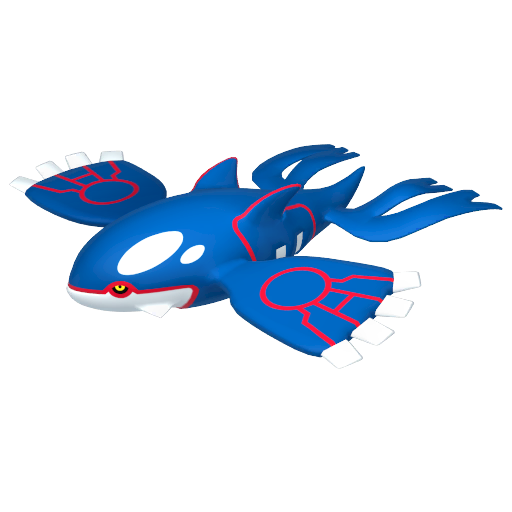
A second entry by the same ワチカネフクキタル at 2199 doubles down on the formula, again anchoring on Hippowdon and Corviknight with Torterra in the same role. Two high-rated finishes on the same archetype confirm this is a refined, repeatable gameplan rather than a one-off result.
しばっちょ@わかしばチャンネル at 2110 is this week's counter wave assembled into one team: Gardevoir, Gengar, and Corviknight are all risers, bolted onto the format staples Garchomp and Meowscarada so the team answers the top picks without giving up firepower of its own. Umbreon is the sturdy support slot that buys the counters time to settle in.
おうぎダーク at 2042 builds on two of the week's risers. Gardevoir pairs Moonblast and Mystical Fire with Healing Wish, so even when it goes down it hands a teammate a full restore. Corviknight runs Curse to raise Attack and Defence together and grind out the long physical games. The 0%-usage Kangaskhan (Fake Out, Ice Punch) and Sneasler (Dire Claw, Close Combat) are the cards opponents are least likely to have prepared for.
Wrap-up & what to watch
The singles meta is in a healthy correction cycle. The counter-picks climbing this week — Gardevoir, Skarmory, Corviknight, Gengar, Volcarona — all exist to punish the top three, and if they keep rising, Garchomp teams will need to shore up their Fairy and Ice matchups or risk getting picked apart. Worth watching whether Gardevoir sustains its momentum after peaking at 2193 under えぬしろ — if it sticks, expect dedicated Ice coverage and special walls to be the next adjustment. The stall archetype's grip on high ladder, anchored by ワチカネフクキタル's Hippowdon-Corviknight core, could also trickle down and reshape mid-ladder building as players study those replays. If you're looking for the pick that would punish that Ice ×4 weakness, Rotom-Frost is the clean fit: Levitate walls Garchomp's Earthquake outright while its Ice STAB hits back for four times damage. Against the rising Gardevoir, Empoleon answers on both ends — Steel resists Fairy and hits it super-effectively in return.
Doubles demands separate attention heading into next week. Basculegion's surge from 20% to 40% is the biggest single mover in either format, and Scovillain (4% to 20%) and Sneasler (8% to 20%) are climbing fast behind it. The support infrastructure — Whimsicott for speed control, Farigiraf for priority denial, Incineroar for defensive pivoting — remains firmly entrenched, keeping doubles fundamentally distinct from singles' breaker-and-wall dynamic. Across both formats, the central question for next week is the same: does the counter-wave keep building, or does Garchomp adapt and hold its ground?